
Charlotte County Release Meanings
A Charlotte County release record answers more than whether a name vanished from the jail population. It identifies the person, the date the named custodian stopped holding that person, the reason control ended, and sometimes the agency that received custody. Charlotte County Jail may release a person after bond, a first-appearance order, pretrial release, or completion of a county term. It may also transfer a person to the Florida Department of Corrections, another county, the U.S. Marshals Service, or immigration custody. Those transfers end one jail stay but do not mean community release.
Terms matter. Bond permits physical release while the court case continues. Release on recognizance, often shortened to ROR, is a court-approved release without a cash bond and may carry conditions. Time served ties the jail exit to a local sentence, though the signed judgment remains the best source for the sentence itself. Discharge usually means a custodial or supervision term has ended. Parole and conditional release end prison confinement while supervision begins. A court dismissal may resolve a charge, but a different charge or hold can keep someone in custody.
- Custodian
- The agency with legal control of the person.
- Discharge
- The end of a custody or supervision term shown by the responsible agency.
- Detainer
- A request or notice that can lead to continued custody or transfer.
- Time served
- A release basis tied to completion of the jail time ordered in a case.
Charlotte County Release Routes
The correct next search depends on the release route. A single Charlotte County booking can end in the community, in supervised status, or at a new institution. The release reason should be read with the court case and any receiving-agency record.
| Release route | What it means | Next source |
|---|---|---|
| Bond or pretrial release | The person leaves jail while the case continues, often with conditions. | CCSO release record and Charlotte Clerk docket |
| County sentence complete | The local jail term ended. | CCSO release record and signed judgment |
| FDC transfer | County confinement ended but state prison custody began or continued. | FDC Inmate Population |
| Prison release with supervision | FDC confinement ended while community supervision started. | FDC Inmate Releases and Supervised Population |
| Federal or ICE movement | The person left the county building under another authority. | Federal docket, BOP, USMS, or ICE ODLS |
Pair an affirmative custody event with legal context. A CCSO record showing release on bond and a Clerk docket showing an open case tell a more complete story than either source alone. Likewise, an FDC released detail plus a Supervised Population result distinguishes a prison exit from the end of all correctional control.
Charlotte County Release Record Fields
The official CCSO Local Arrest Database is the county starting point. Its embedded application was access-blocked during research, so exact live labels should be checked before relying on them. A narrow records request can seek the full release screen when the public result will not open.
| Field | What it establishes |
|---|---|
| Name, aliases, birth date | Identity matching across records with similar names |
| Booking or JCA number | The specific Charlotte County custody event |
| Date confined | When the jail stay began |
| Date and time released | When CCSO stopped holding the person for that event |
| Release reason | Bond, time served, transfer, or another coded outcome |
| Transfer destination | Whether another agency received custody, if public |
| Charges, bond, court date | Links the custody event to its pending or completed case |
The captured CCSO database entry page shows where the official search begins. It does not by itself prove a release.
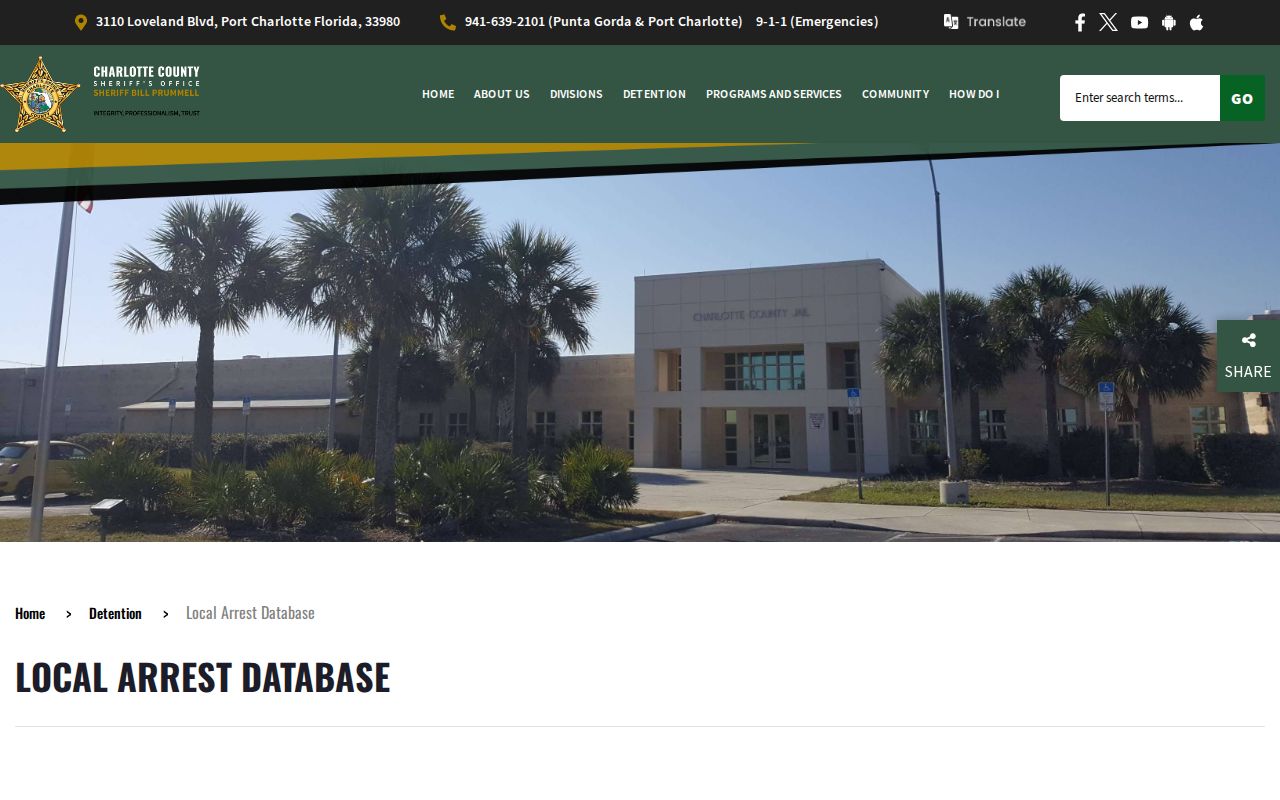
Open the matching booking and look for an actual release date and reason. A missing name or closed browser session is not proof of release.
Request Charlotte County Release Records
When the database is blocked, incomplete, or too old, submit a focused request through the CCSO public-record portal. The custodian is Kerri Towsey, Records Supervisor, at Charlotte County Sheriff's Office, Attn: Custodian of Public Records, 3110 Loveland Boulevard, Port Charlotte, Florida 33980. The agency describes reasonable inspection hours as 8 a.m. to 5 p.m. and redacts confidential or exempt content.
- Give the full name, date of birth if known, and booking, JCA, or arrest date.
- Ask for date and time confined, date and time released, the release reason, and any public receiving-agency field.
- Request charge, bond, case, and booking-photo fields only as needed to identify the event.
- Ask for electronic delivery, a cost estimate before special-service work, and the target production date.
- Keep the JustFOIA request number and compare the response with the court docket.
Florida Statutes section 119.07 calls for prompt acknowledgement and a good-faith response, not a fixed number of days. Default copy charges can reach 15 cents for a one-sided page, five cents more for a two-sided copy, actual cost for other media, and up to one dollar for certification. Extensive clerical, supervisory, or information-technology work may support a reasonable special-service charge. CCSO does not promise a set turnaround for an ordinary release request.
Charlotte County Release Turnover
CCSO's 2025 detention report counted 6,547 total bookings and 6,477 individual releases. It also reported an average stay of 38 days and 17 average bookings per day. These figures describe annual jail operations, not a live list. They also show why daily bookings cannot be matched one-for-one with daily releases. Someone released today may have entered the Charlotte County Jail weeks earlier, while someone booked today may remain in custody.
The totals are useful for scale. They do not answer whether a specific person is free, transferred, or still confined.
Charlotte County Bond Release Timing
The Twentieth Judicial Circuit says release processing after a judge's order usually takes a few hours, typically after monetary bond. That is a local expectation, not a fixed gate time. Identity checks, bond receipt, paperwork, other cases, and holds may extend the process. A person may also qualify for pretrial supervision without posting monetary bond. Both routes can result in physical release while charges and court duties continue.
The Charlotte Pretrial Services information explains the local process. CCSO accepts bond funds through TouchPay and the jail kiosk, but payment is not proof that release paperwork is complete. Call detention before arranging a pickup.
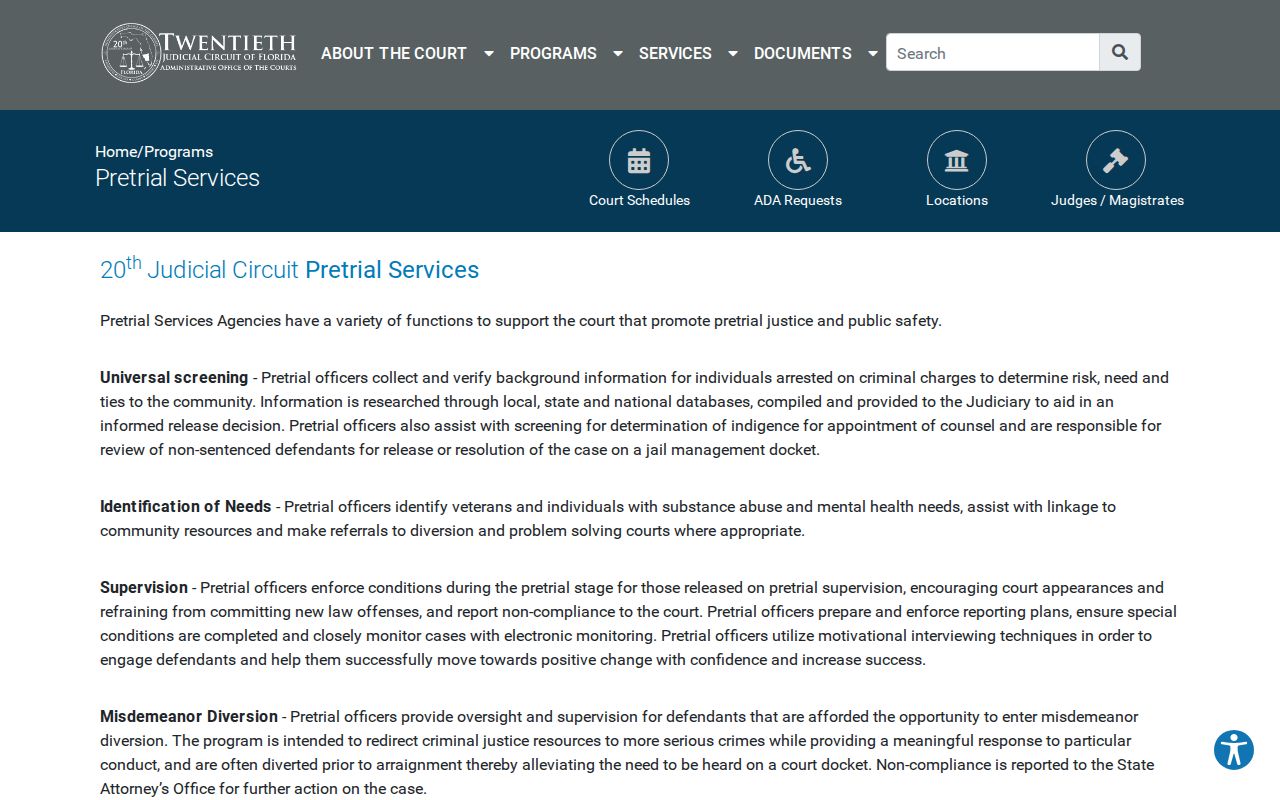
A bond entry confirms the payment route. The Charlotte County release record confirms the completed jail exit.
Rides After Charlotte County Release
The released person is afforded a jail phone call to arrange transportation. Charlotte County Transit may be one option, but it is not a fixed-route bus or an on-demand jail shuttle. The county describes it as fare-free, shared-ride, curb-to-curb service. Advance booking is recommended, same-day space depends on availability, and both pickup and destination must be within the service area.
Transit operates Monday through Friday from 6:30 a.m. to 6 p.m. and Saturday from 9 a.m. to 6 p.m. It is closed Sundays and recognized holidays. Reservations use 941-575-4000. A family member should confirm that jail processing is complete before leaving for Airport Road, then confirm ride timing with the transportation provider. The jail has not published a family waiting or rideshare policy in the reviewed sources.
Note: A judge's order starts processing, but the Charlotte County release event is complete only after jail staff finish all required checks.
Property After Charlotte County Release
CCSO's 2026 inmate handout says personal property is inventoried at booking and may be released through a notarized form. If the person goes to FDC, family has 90 days to retrieve stored property. CCSO also states that an unreceived commissary order is held for 30 days after release. These deadlines concern belongings, not whether a release occurred.
Ask the jail which form, identification, and pickup arrangement apply before traveling. A transfer to FDC changes both the records trail and the property deadline. The county release screen may show that Charlotte County custody ended, while the receiving prison record shows custody continued. Keep the booking or JCA number handy when asking about property tied to a specific confinement.
Charlotte Release Sealing Effects
Florida sealing and expunction can limit public access, but neither begins with a simple deletion request to the jail. FDLE first evaluates an application for a certificate of eligibility. FDLE says a complete application typically takes 12 weeks and is not expedited. The certificate is then used in a petition to the court with jurisdiction. It is not itself an order granting relief.
The Charlotte Clerk lists a $42 seal or expunge filing charge. Florida Statutes sections 943.0584, 943.0585, and 943.059 govern eligibility and relief. Sealed records become confidential and exempt from ordinary inspection. Expunction directs most agencies to destroy or obliterate the record while FDLE keeps a confidential copy for limited lawful access. Earlier lawfully obtained copies elsewhere are not promised to disappear.
A missing online result may therefore reflect sealing, expunction, age, a spelling issue, a protected record, or a technical block. It is not a reliable statement about whether an arrest or release happened.
Find Charlotte County Released Inmates
Use a custody-first search path. The live jail population answers who is held now. It is not the best record for a person who already left. Search the county release record first for a local booking, then move to state, court, federal, or immigration sources only when the event points there. A narrow request is the final county fallback.
- Search the CCSO Local Arrest Database and match name, birth date, and booking date.
- Record the affirmative release date and reason. If inaccessible, call 941-833-6300 or Detention Watch Commanders at 941-833-6357.
- Search the Charlotte Clerk case by name, case number, or citation for the charge outcome and sentence context.
- If the record shows an FDC transfer, search state prison population first. Search Inmate Releases only for an actual or scheduled state release.
- Check Supervised Population after a prison release and VINELink for status notifications.
- Use the federal docket, BOP, USMS, or ICE ODLS when another authority may have received custody.
Florida Search for Charlotte Releases
The FDC Corrections Offender Network is a set of separate databases. For prison releases, begin with Inmate Releases. Enter the six-character DC number when known. Otherwise use last and first name, prefix matching, and the alias option. Match the person by birth date and identifiers before opening the detail. FDC says released information updates nightly and includes people already released or scheduled for release.
| Search field | Use |
|---|---|
| DC number | Most exact match; six characters |
| Last and first name | Prefix-based search when the number is unknown |
| Alias option | Expands name matching |
| Release Date | Past or scheduled event on a released detail |
| Current Release Date | Changeable planning date on an active record |
| Sentence history | Connects the state record to terms and offenses |
The official FDC search menu shows why the database choice matters.
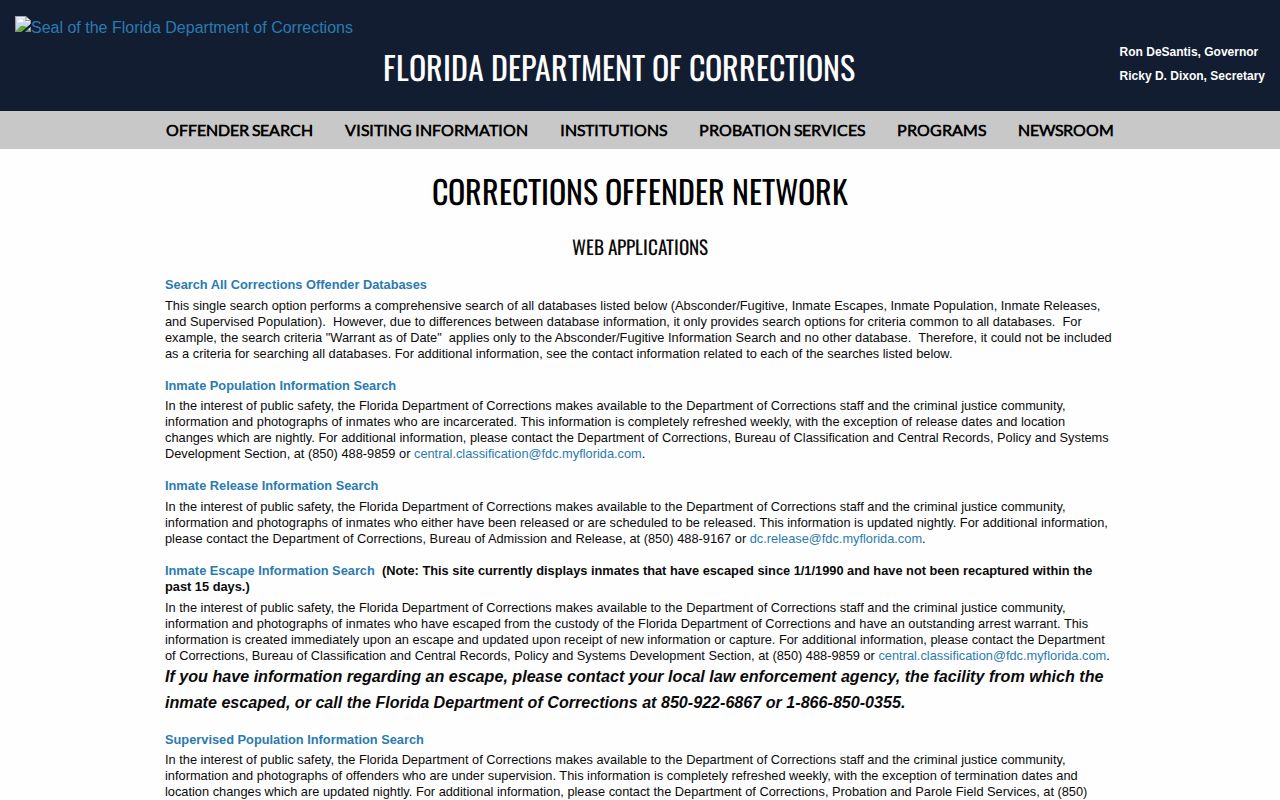
A future date is not proof of departure. After it passes, recheck Inmate Releases and Supervised Population.
Charlotte Released or Still Held
Each source answers a narrow custody question. County jail, state prison, federal, and immigration data should not be merged into one broad conclusion.
| Situation | Best source | What confirms it |
|---|---|---|
| Still in Charlotte County Jail | CCSO live booking record or jail phone | Current custody without a completed release event |
| Released from county jail | CCSO release screen or requested record | Date Released plus Release Reason |
| Transferred to state prison | FDC Inmate Population | Active FDC location |
| Released from state prison | FDC Inmate Releases | Release Date, then supervision check |
| Federal departure | BOP locator and federal docket | Past BOP date and case context |
| Possible ICE handoff | ICE ODLS | Current or recent ICE custody result |
A person absent from one system may be present in another. Search failure can also result from an alias, old event, sealed record, protected information, or a site outage.
Charlotte Court Release Context
The Charlotte Clerk criminal case search supports name, case-number, and citation-number modes, along with opened or closed date ranges and criminal case types. A docket can show charges, disposition, judgment, sentence, probation, and later orders. It does not usually supply the hour when jail staff completed physical release.
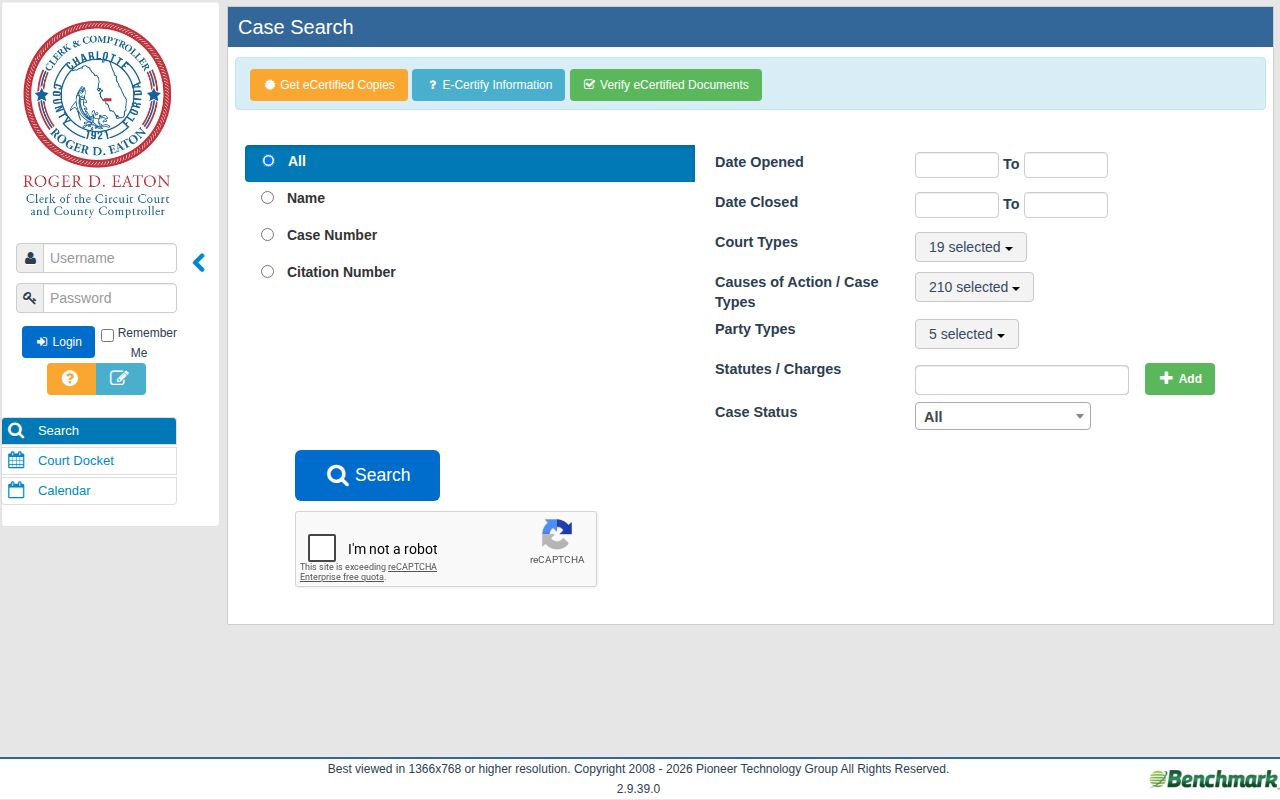
A closed case is not a release timestamp. Compare the docket with the custodian's release record rather than treating either as a substitute for the other.
Charlotte Release or ICE Transfer
A Charlotte County Jail disappearance may be an immigration handoff. CCSO and ICE have a current 2025 agreement under the 287(g) Task Force Model, and an immigration detainer can lead to transfer after ordinary criminal custody would end. The agreement alone proves nothing about a named person. It makes the next-source check important.
Search the ICE Online Detainee Locator by a nine-digit A-number and country of birth, or by exact name, country of birth, and optional birth date. ICE says ODLS includes current detention and people released from ICE within about 60 days. If no match appears, call 1-888-351-4024 on weekdays, excluding holidays, from 8 a.m. to 8 p.m. Eastern or contact the responsible ERO office. A county release date followed by ICE custody is not community release.
Charlotte Jail Mixed Custody
Charlotte County Jail opened in February 2001 as a direct-supervision facility. The 2025 report describes space for local, state or other, and federal contract detainees, including an average of 95 federal inmates. That mix is the key reason to ask where a person went, not merely whether the person left the building.
The jail's renovation work on kitchen, laundry, and plumbing systems extends into 2027, but the county has not published a related change to release procedure. Construction should not be used to explain a missing record. Custody type should. Federal pretrial movement belongs with the federal docket and USMS; a sentenced federal person may later appear in BOP. State transfer belongs in FDC's active population. An ordinary local release remains a CCSO record.
Charlotte Release Alerts and Supervision
Florida VINELink covers all county jails and FDC according to official state program material. Search one specific person, confirm the source agency and identity, then register for available phone, text, or email alerts. An out-of-custody notice is a signal to verify the release reason because the reporting source may have transferred the person. VINELink is not a certified release record and does not cover the federal BOP system.
The official Florida VINELink portal shows the statewide entry point.
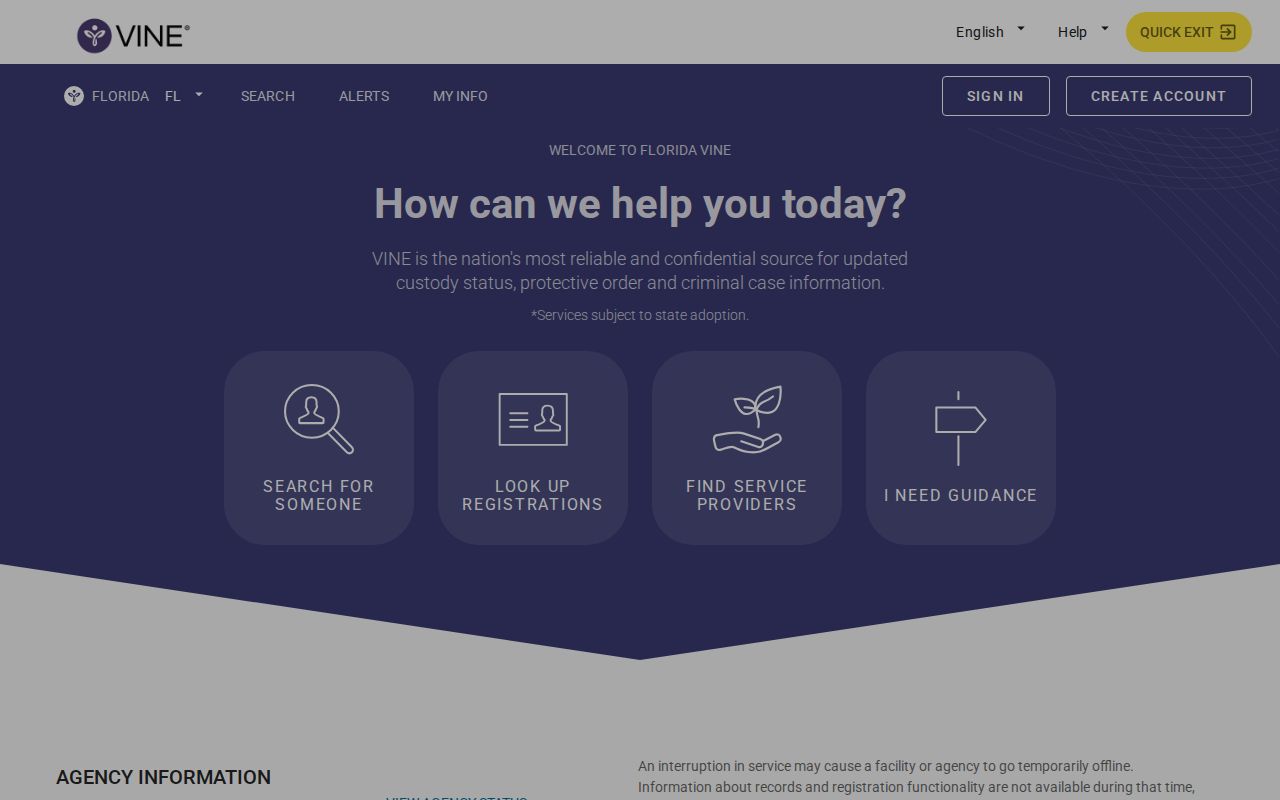
For state supervision, FDC Supervised Population can show a supervision start date, status, type, location, and scheduled termination date. The Circuit 20 Punta Gorda office serves Charlotte County but does not receive every released person. The separate Charlotte County parole and probation resource explains how to verify an assignment.
Charlotte County Release Facilities
Two facilities anchor the local search, but they belong to different systems. Charlotte County Jail is the county booking and release point at 26601 Airport Road, Punta Gorda. Local releases use CCSO's database, jail contacts, and records portal. State or federal transfers require the receiving system. Charlotte Correctional Institution is an FDC state prison at 33123 Oil Well Road. Its actual discharges appear in FDC Inmate Releases, while transfers to another prison remain active state custody.
- Charlotte County Jail: county release screen, Detention Watch Commanders, and JustFOIA.
- Charlotte Correctional Institution: FDC Inmate Releases and Supervised Population.
- Federal contract custody: federal docket, USMS, and BOP when applicable.
- Immigration transfer: ICE ODLS and ERO follow-up.
Use the agency that controlled the event. That keeps a Charlotte County release distinct from a state prison discharge, federal movement, or immigration transfer.