
Charlotte County VINELink Coverage
Florida VINELink is the public portal for Statewide VINE. Official Florida Department of Corrections material says the program covers all 67 county jails plus FDC inmates and offenders. That makes it relevant to both Charlotte County Jail and Charlotte Correctional Institution. It can carry notices about release, transfer, escape, community release, movement to another jurisdiction, return to custody, death, and supervision changes.
VINE is a custody-information and notification service. It is not the custodian’s certified archive. Charlotte County Jail remains the source for a county booking and release screen. FDC controls state-prison custody and supervision records. A status change in VINELink should trigger that direct check, especially when another agency may have received the person.
The portal does not replace BOP, USMS, or ICE sources. Charlotte County Jail houses some federal detainees under contract, but a federal movement may not appear as a full federal custody history in VINE. Use the federal docket and USMS for pretrial custody, BOP after designation, and ICE’s locator for a suspected immigration handoff.
Search Charlotte County VINELink Records
Start with enough identity information to avoid registering on a namesake. An agency or offender ID is stronger than a name alone. Compare the reporting source, birth or identity details, and custody facts visible on the result. Do not republish extra personal details merely because a public screen displays them.
- Open Florida VINELink and select “Search for Someone.”
- Enter the full name or available agency offender or ID data.
- Review all plausible matches and compare the source agency and identity details.
- Open the exact record and note its custody status, location or agency, and event wording.
- If the result says released or out of custody, confirm the release type with CCSO or FDC.
- Check the court, supervision, BOP, or ICE source when the event could involve another system.
A missing result does not prove release. The issue may be spelling, an alias, a different source system, an agency feed, or portal availability. For broader named-person source routing, use the Charlotte County released-inmates lookup, then return to VINELink only when the correct record is identified.
Charlotte VINELink Release Fields
VINELink presents a source-fed snapshot. The field names and choices can vary by reporting agency and current portal state. Read what is present, then pair it with the custodian’s record. A notification event is useful evidence that a status changed, but it may not explain the legal cause or the next custodian.
| Field | How to read it |
|---|---|
| Name or offender identity | Match the person before opening or registering on the record. |
| Agency or source | Shows whether Charlotte County Jail, FDC, or another participant supplied the status. |
| Custody status | Describes the source agency’s present state, not every possible custody system. |
| Facility or location | Helps distinguish local jail custody from state correctional custody. |
| Offender or agency ID | Provides a more precise match for later agency confirmation. |
| Notification choices | Shows the phone, text, or email routes currently offered for that record. |
The Florida VINELink search is illustrated below. The capture documents the state portal and released or registration states without creating a fictitious subject.
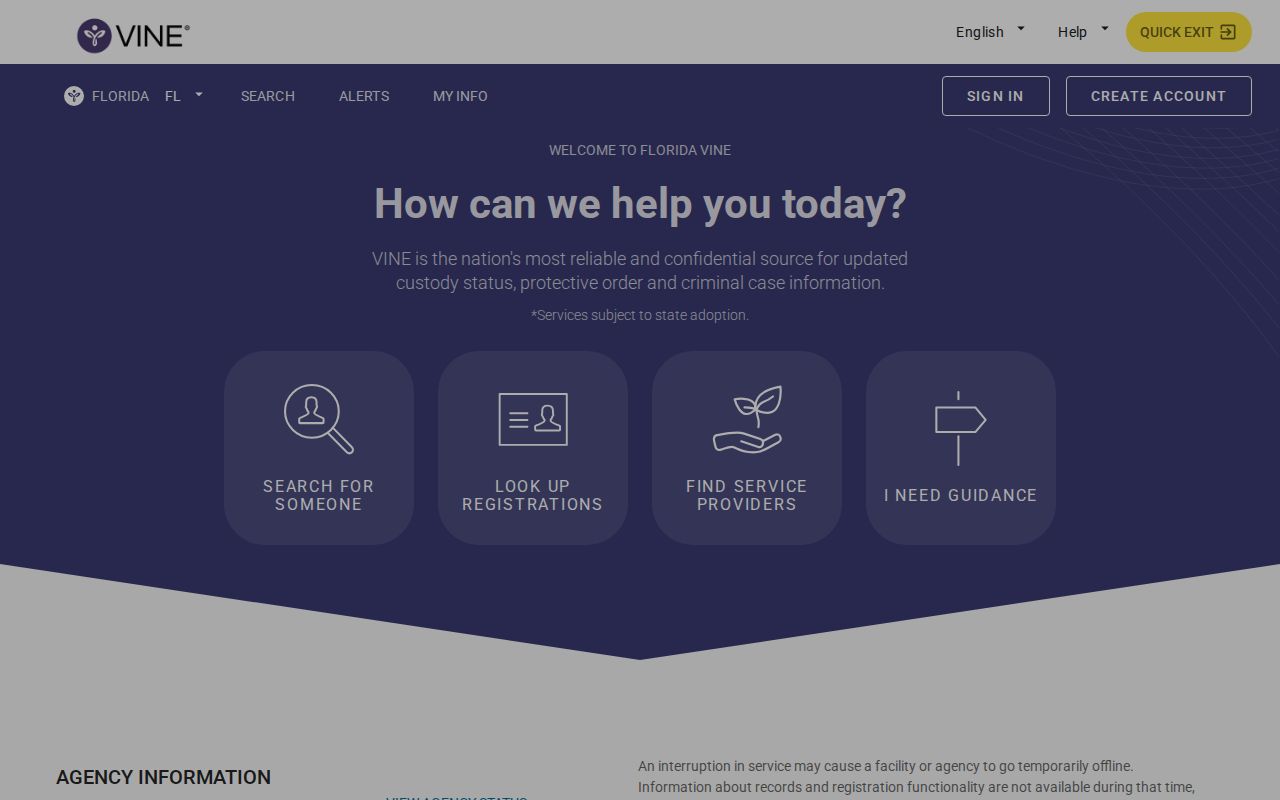
The source agency and exact status remain the key details. They determine which official office should confirm the event.
Register Charlotte County Release Alerts
Register only from the exact matched record. The current portal may offer phone, text, or email, and the confirmation path differs by channel. Keep the telephone PIN. FDC’s current form says automated calls repeat until the recipient enters the PIN, while text and email notices do not repeat the same way.
- Choose “Register for Notifications” on the matched record.
- Select the phone, text, or email channel the current portal offers.
- Enter the required contact information and complete the displayed confirmation.
- For phone notice, choose and retain a four-digit PIN.
- Enter that PIN when an automated call arrives so the call is acknowledged.
- After any alert, contact the reporting custodian and verify the reason and destination.
If no PIN is selected on the FDC form, the last four digits of the phone number become the default. The published Statewide VINE service number is 1-877-846-3435 and operates around the clock. Avoid relying on older training claims about precise data-collection or call intervals. The current form controls present PIN and confirmation wording.
The FDC VINE notification form is shown below. It explains the four-digit telephone PIN and the difference between repeated calls and nonrepeating text or email notices.
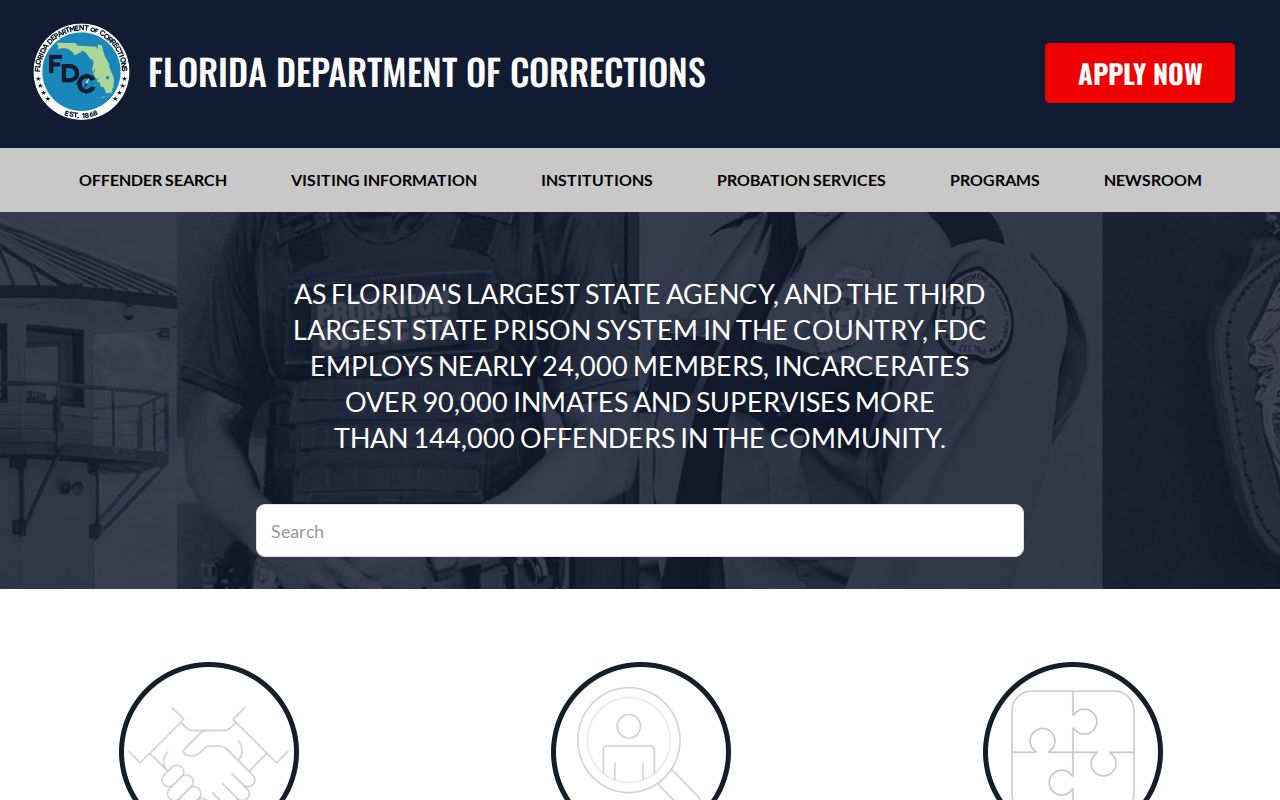
Write down the PIN and keep the registration tied to the exact person rather than a similar name.
Confirm Charlotte VINELink Release Alerts
For Charlotte County Jail, open the CCSO Local Arrest Database and look for a release date and reason. If the application is blocked or unclear, call the jail at 941-833-6300 or Detention Watch Commanders at 941-833-6357. Request the booking and release screen through JustFOIA when documentary proof matters. A transfer field or receiving agency can prevent a false claim of community release.
For FDC, search Inmate Releases by six-character DC number when available, then name and alias. A released detail with a past Release Date is the released-first record. Search Supervised Population next to learn whether state supervision continues. A future Current Release Date belongs to an active record and is a projection, not proof of release.
For BOP custody, search the federal locator. “Released” or “Not in BOP Custody” with a past date confirms departure from BOP, subject to its warning about another system or supervision. For a possible ICE handoff, search the ICE locator. Charlotte’s local custody mix makes these checks more than a generic caution.
Charlotte VINE Registration Is Separate
Direct VINELink registration and FDC Victim Services registration do not automatically update each other. A person who uses both must keep both contact records current. Changing a telephone number or email address in one system should not be assumed to change the other. This is a specific Florida channel issue that can affect whether a notice reaches its recipient.
FDC’s notification request page is the state corrections route. It should be used for the events and registration described by FDC, while the VINELink portal remains the direct record-based search and alert route. The two can complement each other, but neither becomes a certified county release record.
Note: Keep the confirmation date, source agency, and offender ID with each registration so later alerts can be matched correctly.
Charlotte Release Channel Sweep
After a VINELink alert, choose the custodian by the type of record. CCSO controls the physical county-jail event. The Charlotte Clerk controls court disposition and later orders. FDC controls prison release and state supervision. BOP controls BOP custody, while ICE controls immigration detention. Cross-system agreement is stronger than one status page.
- Release
- The reporting custodian stopped holding the person. The reason and destination still need confirmation.
- Transfer
- Custody continued under another facility or agency.
- Supervision
- The person is outside prison but remains subject to an agency or court term.
- Discharge
- A sentence or supervision component ended, as confirmed by its custodian.
A court case marked closed is not a release timestamp. A person absent from VINELink is not necessarily free. A state registry applies only to its qualifying population. These scope limits are why the same identity should be checked in the source that actually controls the custody question.
Record the date and time of every check. Dynamic data can change, and the research found no basis for promising an exact current VINE data cadence. A successful match and alert are useful. Final wording about release should rest on the corresponding CCSO or FDC event.
For Charlotte County Jail, the strongest short proof is a release screen with the booking identifier, release date, release reason, and any transfer destination. If the reason is bond, the Clerk docket can show that the case remains pending. If the reason is time served, the judgment can confirm the sentence. If the event is a transfer, the receiving system becomes the next custody source.
For Charlotte Correctional Institution, use the FDC Inmate Releases result with a past Release Date. Then search the separate Supervised Population database using the same DC number. That sequence distinguishes prison release followed by state supervision from a full discharge. FDC’s Absconder or Fugitive search is relevant only when a state-supervision fact makes it so, not as a general release lookup.
VINELink can also report state supervision changes according to official Florida program material. Those notices should still be matched to the FDC record. An alert describing a supervision event does not turn the county jail into the responsible source. Each system owns a limited part of the timeline, and clear attribution prevents a custody update from being overstated.
When the person has no VINELink result, retry with the exact agency ID and any known alias. Next check the responsible agency portal. If the problem continues, use the agency’s telephone or record-request route. Silence from a notification system has several possible causes and cannot serve as proof that no custody or release event exists.
Keep phone, text, and email registrations current. The FDC form makes clear that direct VINE registration and FDC Victim Services registration are separate, so a change in one does not update the other. Check both after a new number or address is adopted. A missed alert may reflect stale contact data rather than a missing custody event.
Finally, use the notification wording itself. Release, transfer, escape, return to custody, death, and supervision change are not interchangeable. Repeat the exact agency event in notes, then state only what the confirming custodian proves. This practice is especially important in Charlotte County, where county, state, federal, and immigration custody routes can touch the same jail building.