
Charlotte County Three-Day Releases
The Charlotte County Sheriff’s Office offers a single Local Arrest Database, not separate 24-hour and 72-hour release feeds. The agency publishes no rolling-window description, update cadence, or retention term for its online results. A three-day list therefore needs an exact interval and an affirmative release field for each event. Recent arrest records cannot stand in for release records. Booking and release may occur days or weeks apart.
The wider interval is valuable because it collects activity across multiple court and jail work periods. It can catch a Friday order processed later, a weekend discharge, or a release entry that was not visible during an earlier check. Yet a broader window adds more chances for a namesake, multiple bookings for one person, or a custody transfer to be counted incorrectly. Match the booking episode, not just the name.
Check Charlotte County 72-Hour Records
Choose a start and end time before searching. Calendar dates alone can create a window longer or shorter than 72 hours. If the current embedded application supplies an actual release-date filter, apply the defined interval and inspect each result. If it only filters booking dates, it cannot answer this question.
- Open the official Local Arrest Database and enter the embedded bookings application.
- Look for a released-record control and a release-date range. Use only controls visible in the live system.
- Open each candidate booking and match name, birth details, and booking or JCA.
- Record the release date, time, reason, and any public transfer destination.
- Recheck near the end of the interval for a late entry, then call detention when the result is unclear.
- Request the existing release log for the precise period when the online system cannot produce it.
The embedded host blocked the research session, although the CCSO outer page remained available. That means failure to load the application is not a negative custody result. For a same-day check, the Released Last 24 Hours page narrows the window and emphasizes active release processing.
Charlotte County Three-Day Fields
Research could not confirm every current CCSO result label because the embedded host blocked access. Secondary observations support the fields below, but the formal booking and release screen remains the best evidence. Ask for a small record that proves who left, when that custodian stopped holding the person, and why.
| Field | Three-day use |
|---|---|
| Legal name and aliases | Separate similar names and find another listed identity. |
| Birth details | Confirm identity without relying on a photograph alone. |
| Booking or JCA | Distinguish separate jail episodes inside the same interval. |
| Date confined | Show when the booking began, which may precede the window. |
| Date and time released | Place the event within the exact start and end times. |
| Release reason | Separate bond, pretrial release, time served, dismissal, and transfer. |
| Receiving agency | Show that custody continued after the county event when recorded. |
The official CCSO database page is shown below. It is the verified access point even when the embedded host limits a session.
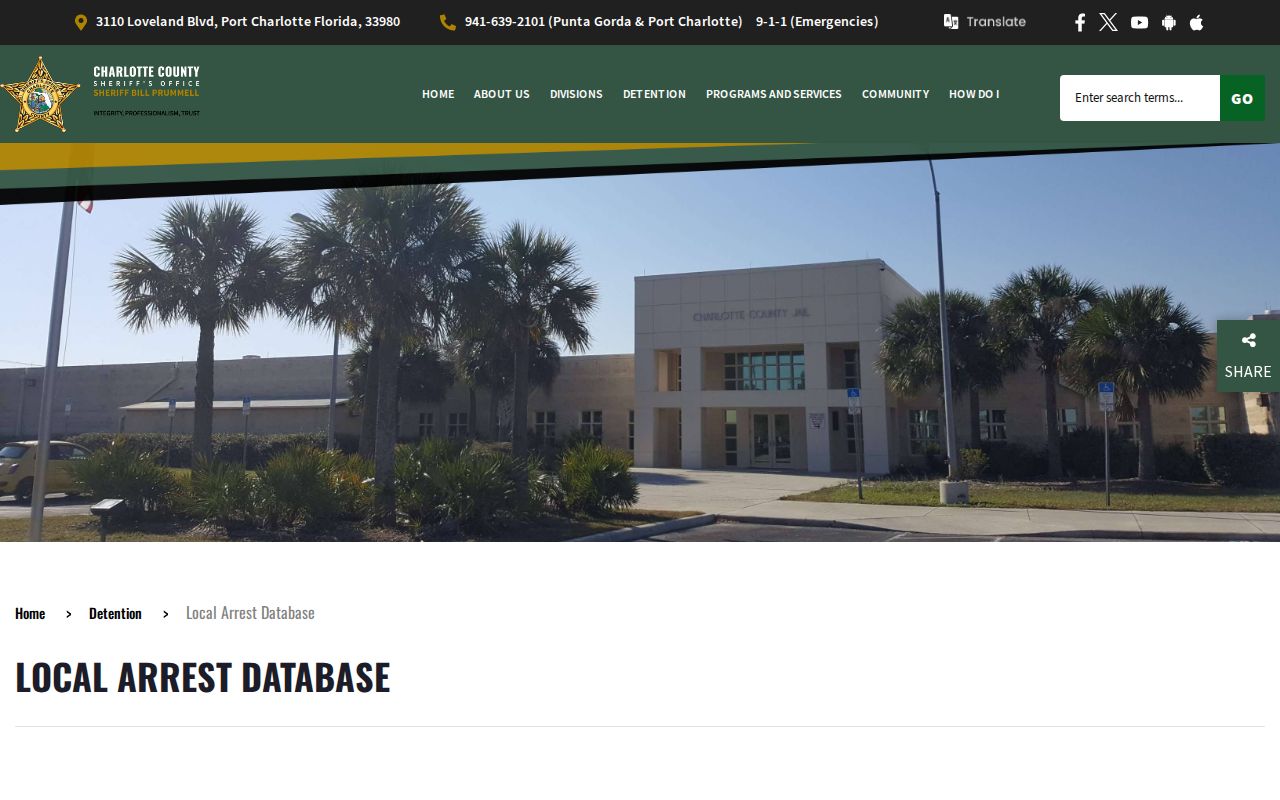
The screen supports the county search route, but it does not establish a sheriff-labeled rolling 72-hour product.
Charlotte Weekend Release Timing
A three-day interval often crosses a weekend. The Twentieth Judicial Circuit says processing after a judge’s release order usually takes a few hours, typically after monetary bond, but the statement is not a fixed deadline. Holds, bond receipt, identity work, another case, and transfer paperwork can affect when the jail event is complete. An order entered inside the window may lead to physical release later.
Transportation is a separate concern. The released person is afforded a jail phone call to arrange a ride. Charlotte County Transit is shared-ride and curb-to-curb, not an on-demand jail shuttle. It runs weekdays and Saturday, closes on Sundays and recognized holidays, and recommends advance booking. Those limits do not change the legal release time, but they matter when confirming whether pickup has actually been arranged.
A holiday also can affect when a user checks the site or contacts an office. No source establishes a special CCSO web cadence for weekends. FDC nightly updates apply to FDC, not to the county database. Historical VINE timing cannot be borrowed as a sheriff publication schedule.
Note: Recheck the first business day after a weekend window when a court order exists but the physical release time remains unclear.
Request Charlotte County Three-Day Logs
Ask CCSO for records showing people released from Charlotte County Jail between the stated start and end times, including release date, release time, and reason, while excluding exempt information. This wording seeks an existing log or report. Chapter 119 does not require the agency to build a new analysis. If the interval needs extraction or extensive redaction, CCSO may give a fee estimate.
Submit through the CCSO JustFOIA public portal. If no interval report exists, narrow the request to a named person and booking episode. Include a birth date if known, booking or JCA, and arrest date. Ask for confined and released times, release reason, public transfer destination, charge and bond fields, and the booking photo. CCSO promises no fixed ordinary-request turnaround, so ask for acknowledgement and a target date.
Detention Watch Commanders at 941-833-6357 review booking, release, and transfer paperwork. The general jail line is 941-833-6300. A phone response can clarify status faster but is not a certified record and may be limited. The Charlotte County released-inmates search explains which other custodian to use for one named person.
Charlotte Release Duplicates and Transfers
A wider list can contain several records tied to one person. Count release events by booking or JCA, not merely by name. If one person had two booking episodes, both need their own confined and released dates. A corrected or delayed entry should not become a second event. Preserve the check time because the database is dynamic and CCSO publishes no retention rule.
The release reason changes the meaning of the row. Bond means physical release while the case proceeds. Pretrial supervision can begin without monetary bond and still carry conditions. Time served links the jail event to a local term, though the signed judgment gives the legal sentence. Transfer to FDC, another county, USMS, or ICE is a departure from Charlotte County Jail, not community release.
| Three-day issue | Correction |
|---|---|
| Recent booking treated as release | Require a release date and reason. |
| Same name appears twice | Match birth details and booking identifiers. |
| Out-of-custody alert | Confirm whether another agency received the person. |
| Missing web result | Use detention phone or a narrow record request. |
Charlotte County Release Fallbacks
Florida VINELink can notify a registered user of a matched status change, yet it is a source-feed service rather than the custodian’s certified record. A release or out-of-custody alert does not exclude transfer. Confirm a county event with CCSO and the court. For a state-prison release, use FDC Inmate Releases and then Supervised Population. A future FDC date is a projection, not proof that departure occurred.
Use the Charlotte Clerk docket for the court result. A closed case does not state the hour jail processing ended. For a federal detainee held in Charlotte contract beds, check the federal docket and USMS rather than assuming BOP has the record. Where an ICE handoff is suspected, use the ICE locator. Source agreement is stronger than roster absence.
A returned record with a release date is affirmative evidence. No result may reflect spelling, an alias, another custodian, older coverage, confidentiality, sealing, or technical blocking. The proper endpoint of a failed search is a phone call or focused request, not a claim that the person was free during the 72-hour interval.
The Charlotte Clerk portal adds legal context through name, case, or citation searches and opened or closed date filters. A docket can show a bond order, dismissal, judgment, jail credit, or probation term, but it may not show the hour detention staff completed release. Pair the docket with the CCSO event rather than using a closed case as the three-day timestamp.
Save the exact interval, result identifiers, release reasons, and time checked. That small audit trail helps resolve a corrected entry or duplicate booking later. It also prevents two researchers from counting the same Charlotte County event under slightly different names. When a receiving agency is listed, preserve that field and route the next check to that agency.
A three-day total should count confirmed jail departures only once. Keep community releases separate from transfers so the result remains clear and useful.