
Charlotte Released Booking Photos
A mugshot is the photograph made during booking. The Charlotte County inmate handout says booking includes photographs. Many Florida booking photos are public agency records, subject to exemptions. The safe statement is not that every photo is always open. A custodian may withhold or redact an image when a current exemption applies, and juvenile, sealed, expunged, victim, security, or other protected material may be absent.
Release does not erase the booking event. The photo can remain linked to a historical arrest record after the person leaves the live jail population. It still says nothing by itself about dismissal, acquittal, conviction, sentence, or transfer. Pair a CCSO image with Date Released and Release Reason, then use the Charlotte Clerk docket for case disposition. A press image may not be the booking photograph at all.
Florida also regulates a limited class of commercial booking-photo publishers. Section 901.43 provides a removal process and bars covered publishers from soliciting or accepting payment for removal. It does not command CCSO or FDC to delete an official public record.
Charlotte Released Mugshot Sources
Use the source that owns the booking. A county jail image and an FDC prison photograph come from different systems. Registries apply only to people with a statutory registration duty. Third-party and news copies are discovery leads, never substitutes for release or court records.
| Channel | Has photo? | How to access |
|---|---|---|
| CCSO Local Arrest Database | Booking photos are supported by the handout and secondary observations; current display needs live confirmation. | Search the official booking record and match identity plus release fields. |
| CCSO public-record request | Request the booking photograph, subject to exemptions. | Use JustFOIA with name, birth date if known, and booking date or JCA. |
| CCSO mobile app | Current photo and release functions are unverified. | Do not rely on the app without a present feature screen. |
| FDC Inmate Releases | FDC says release records contain photos when available. | Search a state-prison record by DC number or name. |
| FDLE registries | Qualifying registry records may show a photo. | Use only for a person within the registry’s legal scope. |
| VINELink | Display varies and is not a photo archive. | Use for custody status and notice, then confirm with the agency. |
| News or third-party copies | A copied image may persist. | Treat it as an unverified lead and return to official records. |
The official Charlotte County bookings application is shown below. The captured result area documents where a booking image and released result may appear.
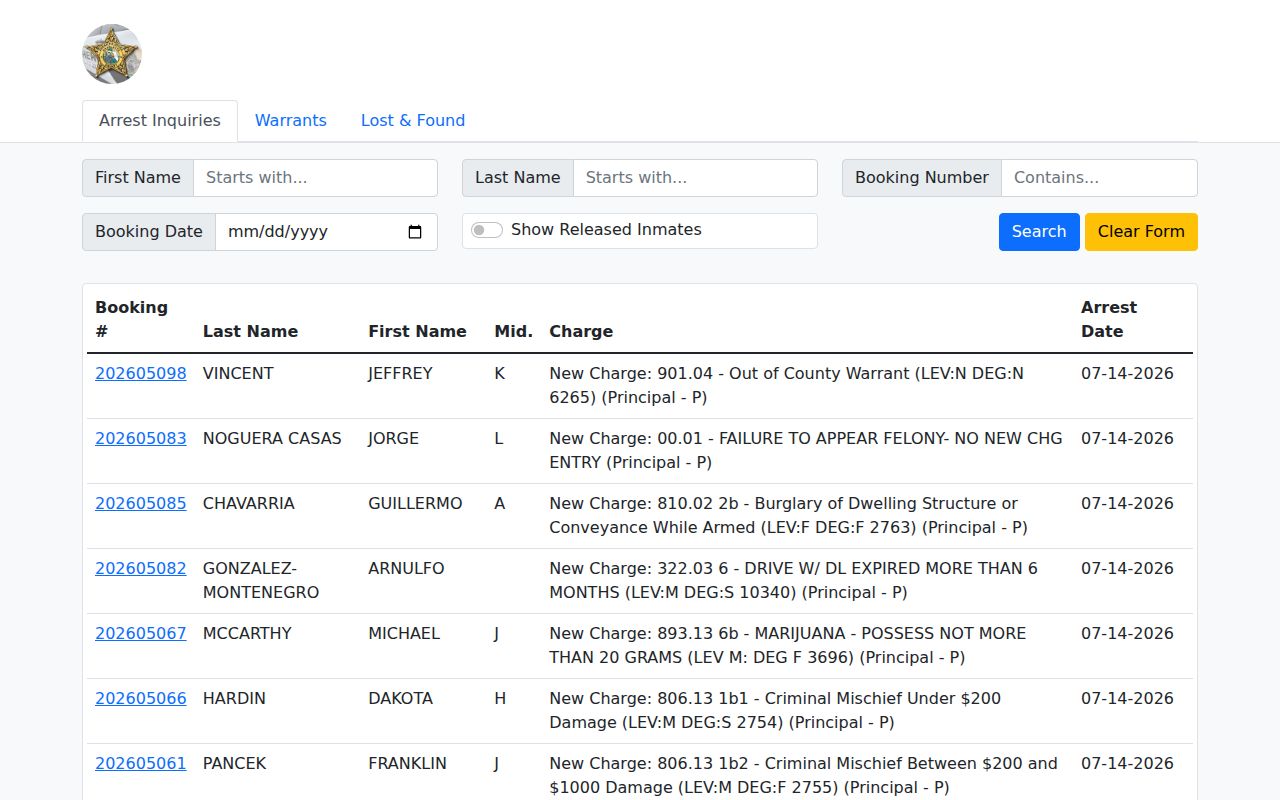
Open the live booking and confirm both the identity and release reason before drawing any status conclusion from the photograph.
Charlotte Sheriff Photo Channels
CCSO calls its web system the Local Arrest Database. It is more useful for a past booking than a current-only roster because the available research supports released fields, but the embedded host blocked the research session. Current exact result labels and photograph display must be checked in a normal browser. A missing image may reflect the interface, an exemption, a sealed record, or technical access. It does not establish that no booking occurred.
CCSO also has official iOS and Android apps. The agency’s 2019 announcement said users could browse recent arrests. Accessible current store material did not verify an inmate module, release filter, or mugshot display. The app must therefore be described only as an official app with unverified current release and photo capability. Recent arrests are not a released-mugshot gallery.
If the goal is a same-day release event rather than the image itself, use the Released Last 24 Hours process. That route requires a release date and reason. A photograph adds identity context but cannot replace those fields.
Note: Preserve the booking identifier with any image so a later court or release check can be tied to the same event.
Request Charlotte County Booking Photos
A narrow request is easier to identify and redact. Use the CCSO JustFOIA portal and ask for the booking photograph tied to one known arrest. Include enough data to select the right event. If the photo is withheld, ask for the exemption citation and production of the nonexempt booking and release fields.
- Provide the full name and date of birth if known.
- Add the booking or JCA, arrest date, and related case number when available.
- Request the booking photograph plus confined and released dates and the release reason.
- Ask for electronic delivery and a cost estimate before chargeable special-service work.
- Keep the JustFOIA request number and ask for acknowledgement and a target production date.
- If an exemption is asserted, request its citation and the nonexempt remainder.
Florida section 119.07 requires prompt acknowledgement, good-faith response, inspection and copy access, and redaction rather than withholding a mixed record in full. Statutory defaults may apply when no other fee is prescribed, while extensive clerical, supervisory, or technical work may support a reasonable special-service charge. CCSO does not publish a guaranteed turnaround for an ordinary booking-photo request.
The CCSO records-request screen is illustrated below. It is the official fallback when the photo or released booking cannot be obtained from the database.
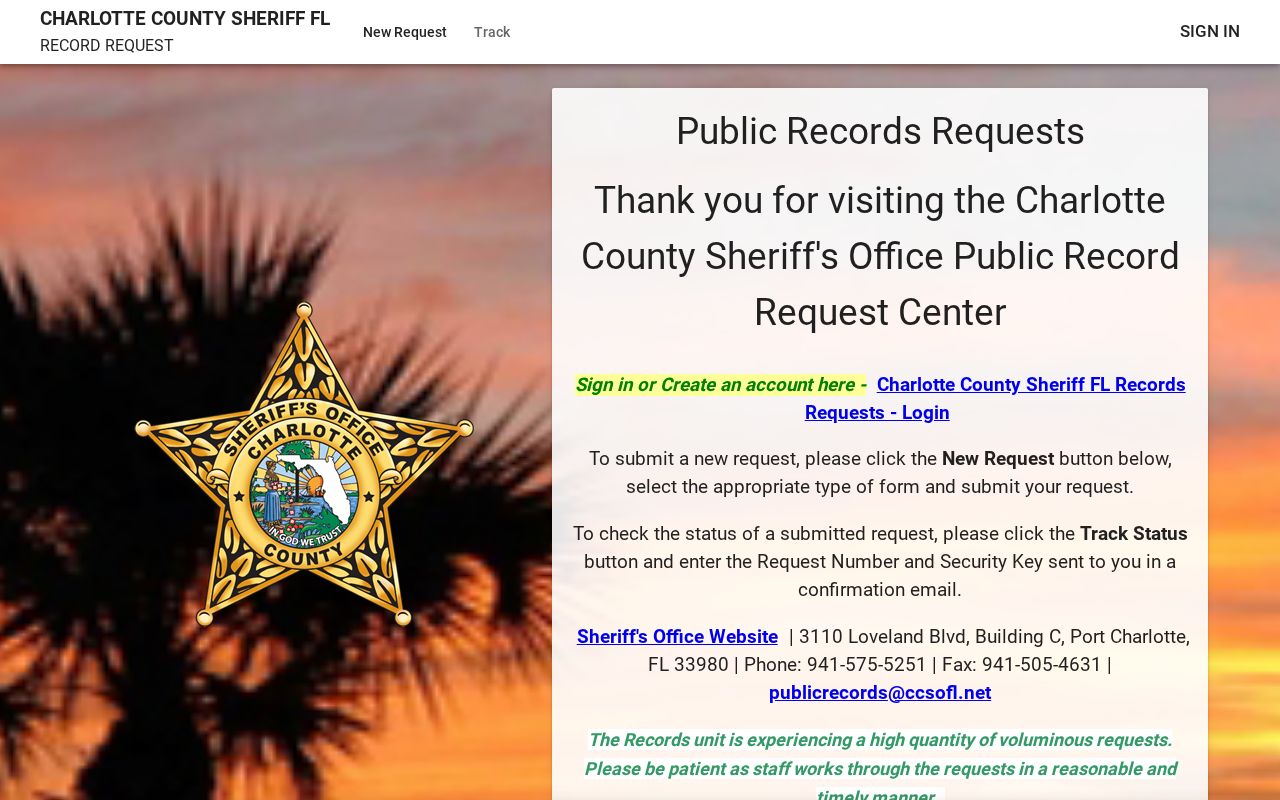
Ask for the smallest record set that proves the booking photo, release event, and any public transfer destination.
Charlotte Mugshots Beyond Official Records
Third-party aggregators can retain a copied photo after an official interface changes. Their records may omit a later disposition, corrected release reason, sealing action, or transfer. No commercial mugshot publisher or data broker is linked or endorsed here. If a copied image helps identify a likely booking, return to CCSO and the Charlotte Clerk before stating what happened.
Local news and official CCSO news releases also may show a person’s image. A press-release portrait is not always the booking photo, and an article reflects the information available when it was published. Check for later court entries and agency corrections. The image should be treated as historical reporting, not a live custody indicator.
Federal channels are poor photo sources. BOP’s public locator focuses on identity, status, release date, and location. USMS generally does not release mugshots, and ICE’s locator answers custody questions rather than serving images. A public federal booking image, if one exists, must be sought from the correct agency or court source.
Florida Mugshot Removal Rules
Florida Statutes section 901.43 applies to a limited class of commercial booking-photo publishers. The subject or legal representative sends a registered-mail request to the publisher’s registered agent with identity proof and enough detail to identify the photo. A covered publisher must remove it without charge within 10 calendar days and may not republish or redisseminate it. The statute also provides court remedies and potential daily penalties.
This route does not require an official CCSO or FDC custodian to erase a lawful public record. If an agency image is wrong or should be confidential under a court order, identify the exact record and give the custodian the order or source record supporting correction. Let the agency cite any current exemption rather than assuming that every image must remain open or be removed.
Charlotte Mugshots After Expungement
Sealing and expunction change official access under Florida law. FDLE says a complete Certificate of Eligibility application typically takes about 12 weeks and is not expedited. The certificate is only an eligibility step. The person must then petition the court with jurisdiction, generally in the county of arrest, and the certificate does not guarantee that relief will be granted.
Charlotte’s Clerk lists a $42 seal or expunge filing charge. Sections 943.0584, 943.0585, and 943.059 govern eligibility, expunction, and sealing. A sealed record becomes confidential and exempt from ordinary public inspection. Expunction directs destruction or obliteration by most agencies, while FDLE retains a confidential record for narrow statutory access.
Neither process promises deletion of every image copied earlier by a private party. The court order and agency response control official access. Private removal must follow the applicable law and the recipient’s process. Avoid any service that suggests payment is the only route when section 901.43 requires free removal from a covered publisher.
The Florida booking-photo publisher law is shown below. The statute’s scope is narrower than all websites or all official sources.
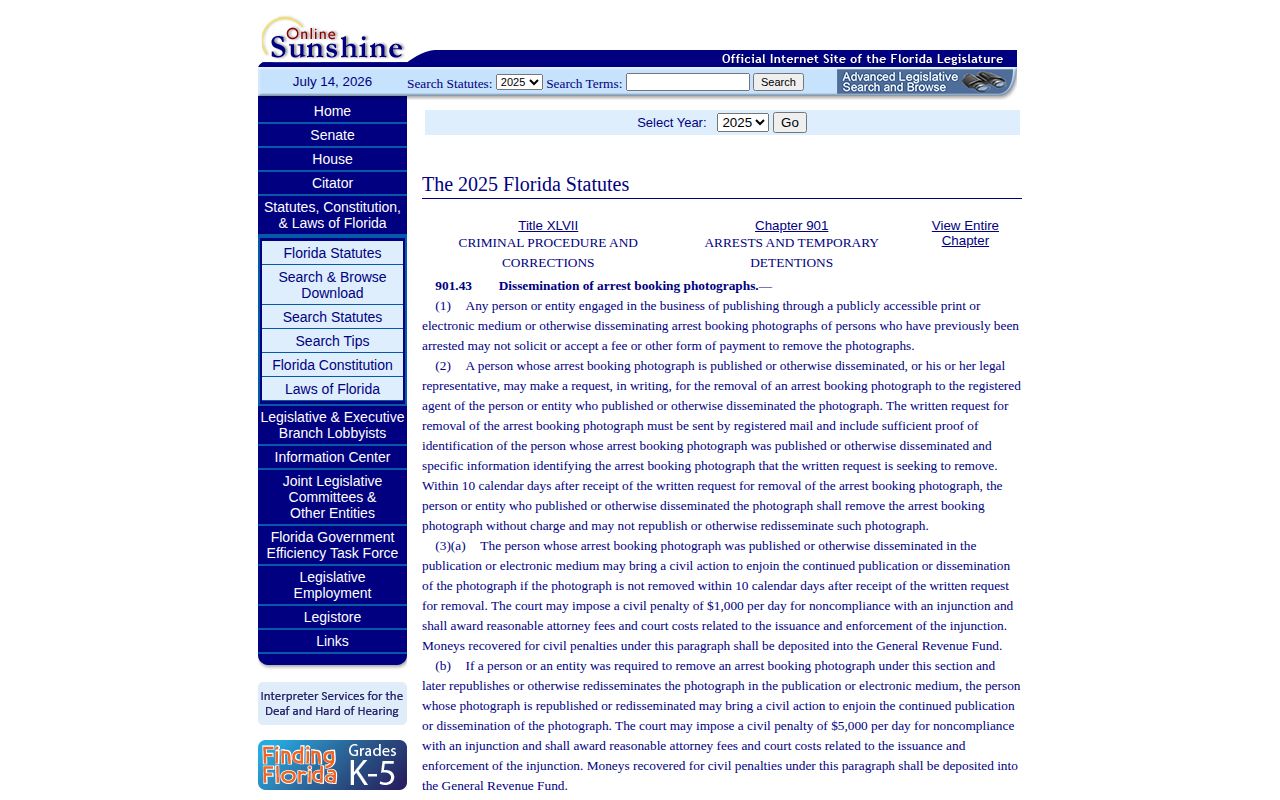
Apply the statute to covered commercial publishers and use the court and agency process for official records.
Charlotte State Release Photos
FDC says its Inmate Releases database contains photographs. The released detail may show a photo, six-character DC number, identity fields, custody, Release Date, aliases, and prison sentence history. This is the correct photo route for a state-prison record, including a discharge from Charlotte Correctional Institution. It does not cover an ordinary county-only booking.
The FDC released-result example is shown below only to document system field behavior. It is not presented as a featured person.
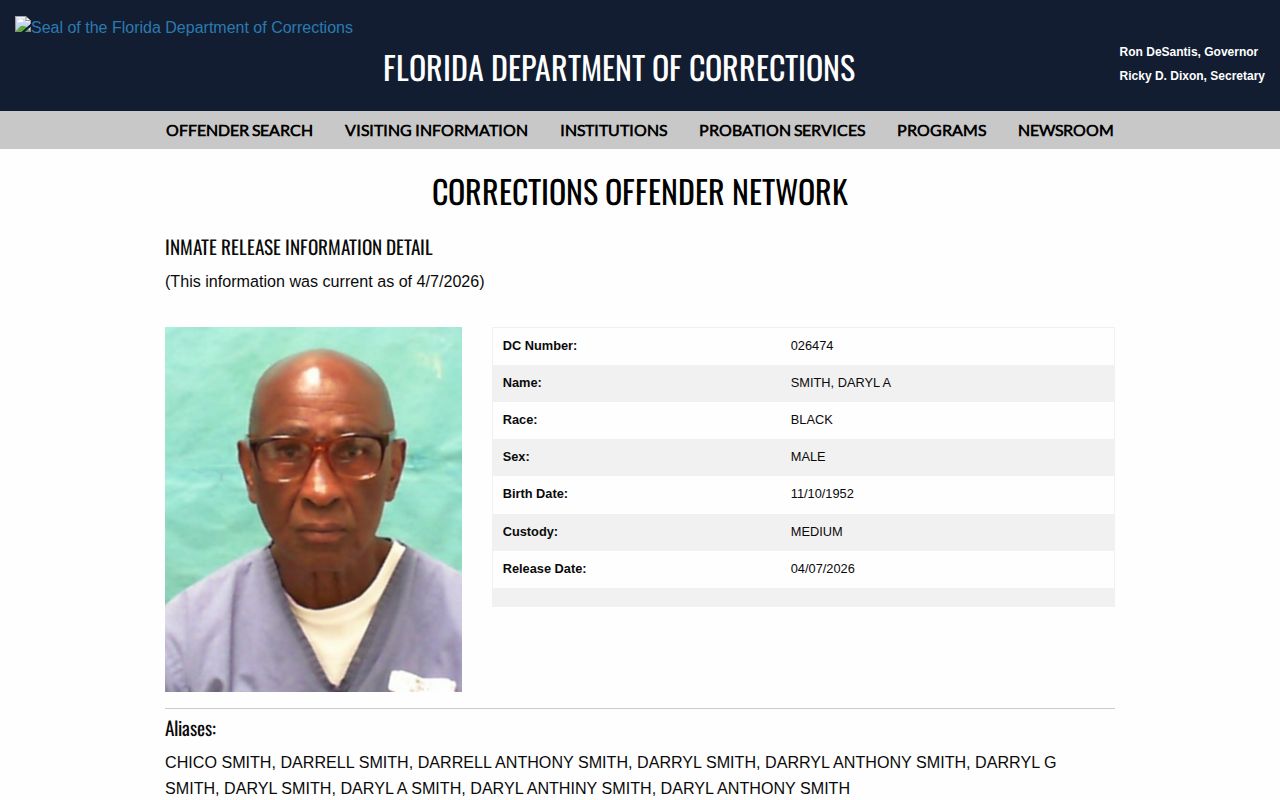
Match by DC number when possible, then use Release Date and Supervised Population to distinguish prison departure from ongoing supervision.
FDLE sexual-offender, predator, and career-offender registries may show photos for people within their statutory categories. They are not universal mugshot archives. Read statuses such as released subject to registration, supervised, confinement, deported, deceased, or absconded accurately. A registry image should never be generalized to all Charlotte County releases.
Verify Charlotte Mugshot Status
A booking photo establishes a visual record associated with one arrest. It cannot prove release. The best county packet pairs the CCSO image with a release screen showing Date Released and Release Reason, then adds the Clerk docket for disposition. Bond means physical release while a case continues. A transfer means custody continued with another agency.
- Booking photo
- An image captured during the booking event.
- Release reason
- The agency’s recorded basis for ending its custody, which may include transfer.
- Disposition
- The court’s result or order in the case, not the jail’s exit time.
- Expunction
- A court process that changes official access after statutory eligibility steps.
When no photo appears, ask the official custodian rather than filling the gap with an unmatched image. When a photo does appear, record the source, booking identifier, and check date. Those steps preserve dignity and accuracy while keeping the image tied to the event it actually documents.